


Imagine two warehouses in Murfreesboro. Same size, same layout, same Tennessee heat beating down day after day. One owner ends up spending way more on cooling. Why? It all comes down to the roof they picked ten years ago.
This isn't a theory — it's backed by research from Oak Ridge National Laboratory showing that cool roofs in Tennessee climates can reduce cooling energy consumption by 20–40%. According to the Lawrence Berkeley National Laboratory, a white roof reflecting 80% of sunlight stays approximately 50°F cooler than a dark grey roof. As certified Murfreesboro commercial roofing contractors, we've tracked the real-world performance of every major system since 2006.
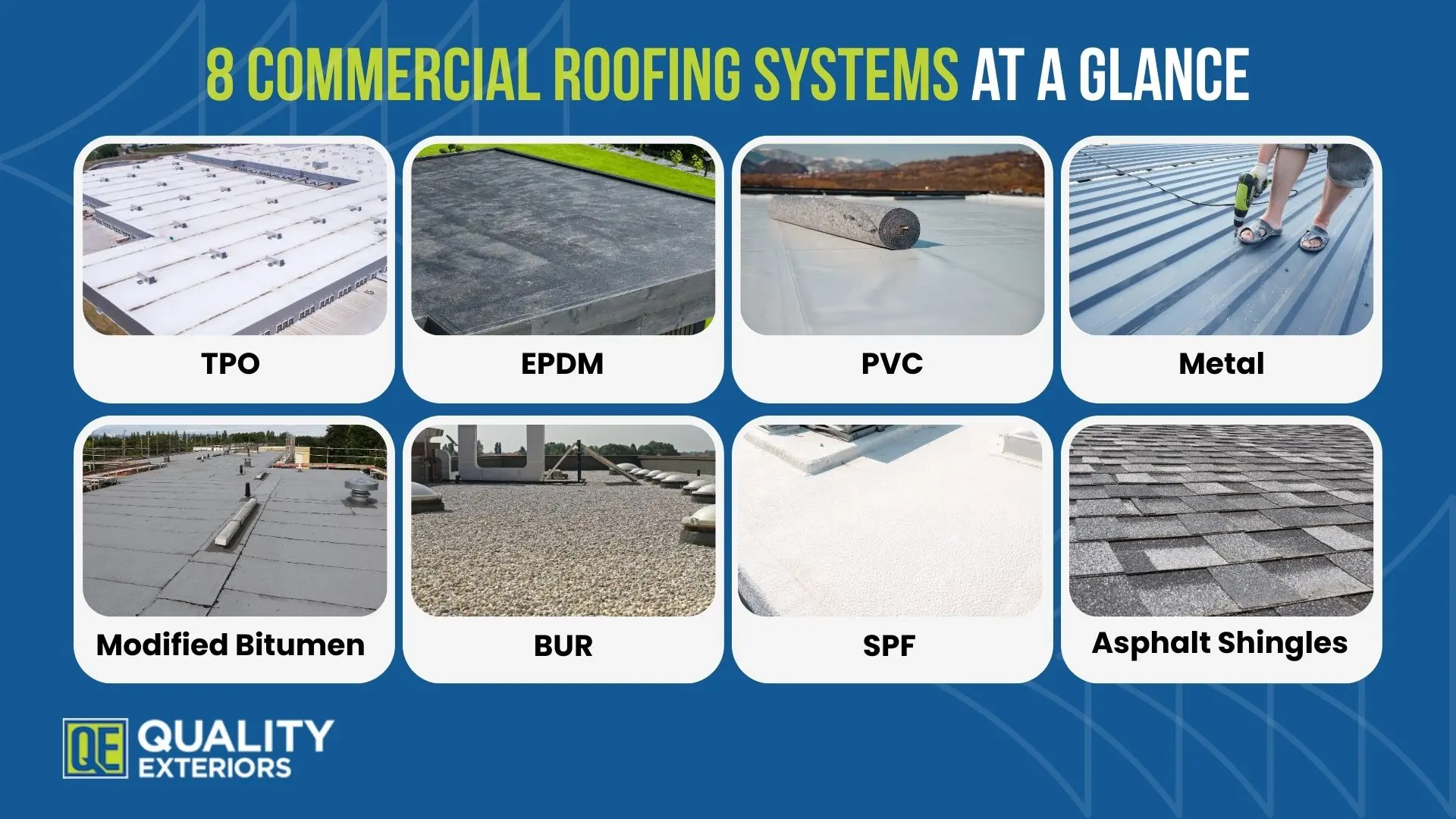
Types of Commercial Roofing Systems for Tennessee Buildings
Based on data from the National Roofing Contractors Association, single-ply systems command 81% of contractor usage and generate 36% of industry revenue. Tennessee's climate — characterized by extreme heat, severe weather events, and high humidity — demands roofing systems with proven reliability.
1. TPO: Superior Energy Performance Leader
TPO (thermoplastic polyolefin) is the most widely installed single-ply membrane, holding 37.7% of the market, based on the Commercial Single-Ply Membrane Market Analysis. This advanced commercial roofing material delivers the kind of energy efficiency that Tennessee buildings depend on, especially during long cooling seasons. For flat roofs and low-slope roofing applications, TPO roofs consistently outperform traditional options in reducing cooling costs. Professional installation by qualified roofing contractors ranges from $3.50–$14 per square foot, with documented energy savings of $0.30–$0.50 per square foot annually.
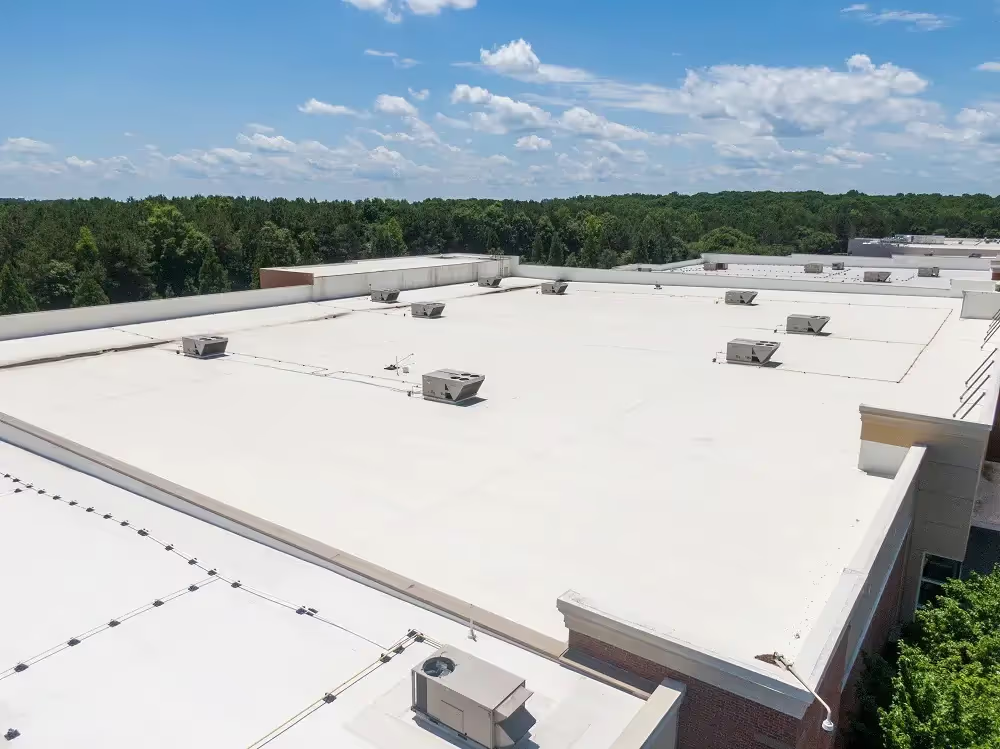
- Pros: Energy efficiency reduces cooling costs by 20-40%, heat-welded seams eliminate leak points, lightweight design reduces structural strain, and high resistance to UV rays and chemical exposure.
- Cons: More expensive than EPDM roofing initially, requires skilled installation when typically installed, vulnerable to punctures during heavy foot traffic without protective walkway pads.
Best fit for: Office complexes, retail locations, medical centers, hotels, logistics, and warehousing facilities.
2. EPDM: The Proven Performer
EPDM (ethylene propylene diene monomer) has been a staple among types of roofs on commercial buildings since 1962. This rubber-based membrane offers solid performance across a wide range of temperatures, delivering long-term results for properties working with tighter budgets.

- Pros: Lower upfront costs than TPO or PVC make EPDM roofing a cost-effective roofing option, flexible sheets with excellent dimensional stability accommodate building movement, proven track record spanning decades, simple repairs reduce maintenance expenses.
- Cons: Black color absorbs heat and increases cooling costs, seams must be sealed properly when installed correctly to prevent leaks, less puncture-resistant than modified bitumen roofing systems.
Ideal for: Cost-conscious projects, rooftops with limited access, regions with high hail risk, buildings with wide temperature variation.
3. Metal Roofing: The 70-Year Investment
Metal roofing, especially standing seam systems, offers unmatched longevity, often lasting generations. While the upfront price tag is higher, long-term maintenance costs are low, and the lifespan often exceeds other systems by decades.
Standing seam metal roofs use concealed fasteners and raised seams following the same technique to create one of the toughest roofing types and most weather-resistant roof assemblies available. Material options include galvanized steel (30-45 years), aluminum (40-60 years), and copper (100+ years).

- Pros: Exceptional longevity of 30-70+ years reduces roof replacement frequency, naturally sheds water and snow, which prevents ponding on flat roofing solutions, recyclable at the end of life to support green roofs initiatives, minimal maintenance beyond occasional inspections.
- Cons: Higher installation costs than membrane systems, can be noisy during heavy rain without proper fiberglass insulation, requires skilled contractors for proper installation, expansion/contraction needs accommodation in design.
Premium applications: Corporate headquarters, architectural showcases, long-term ownership properties, sustainable building projects.
#cta_here
4. PVC: Premium Chemical and Fire Resistance
PVC roofing is a durable option for commercial buildings as it offers superior resistance to chemicals, grease, and fire. It’s installed with heat-welded seams and used in restaurants, hospitals, and manufacturing. Hot air welding creates a strong, watertight seal, with Class A fire protection.
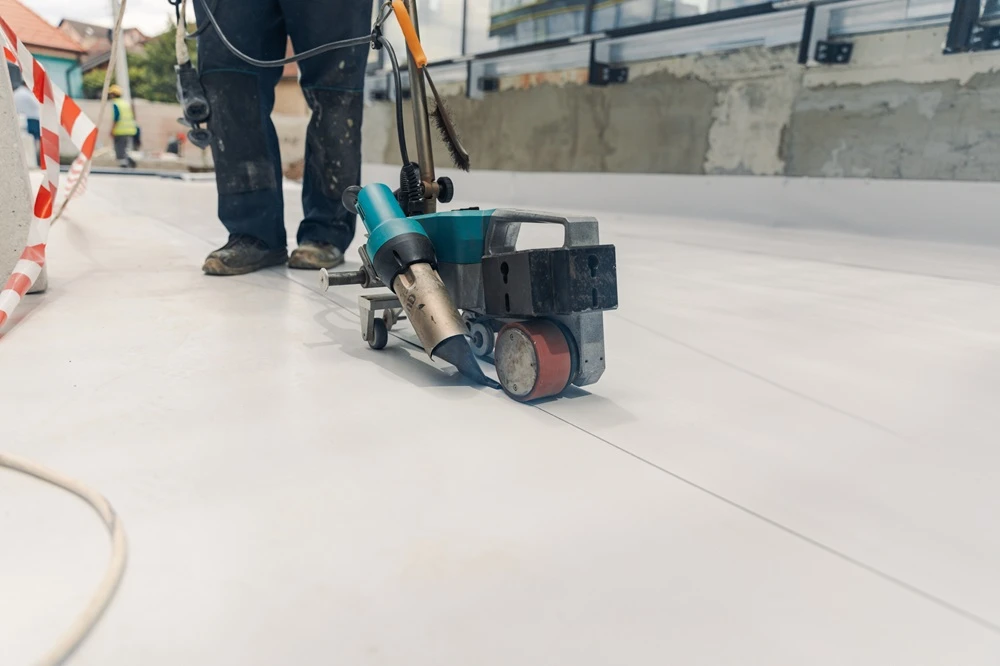
- Pros: Unmatched chemical and grease resistance protects against common contaminants in industrial roofing material applications, superior fire ratings enhance building safety, flexible sheets maintain integrity through temperature extremes with excellent dimensional stability, proven longevity of 20-30 years.
- Cons: Higher upfront investment than TPO or EPDM systems, plasticizers can leach out over time reducing flexibility, requires experienced contractors for proper heat-welding.
Best for: Restaurants with grease exhaust, food processing plants, hospitals, cold storage facilities, chemical manufacturing, and commercial properties needing superior fire-resistant ratings.
5. Modified Bitumen: The Tough-as-Nails Option
Some roofs take a beating, from constant HVAC access to heavy foot traffic during equipment service. Modified bitumen is made for exactly that kind of stress. This rugged, multi-layered system uses polymer reinforcement to create a durable surface that outperforms most single-ply membranes in high-impact environments.
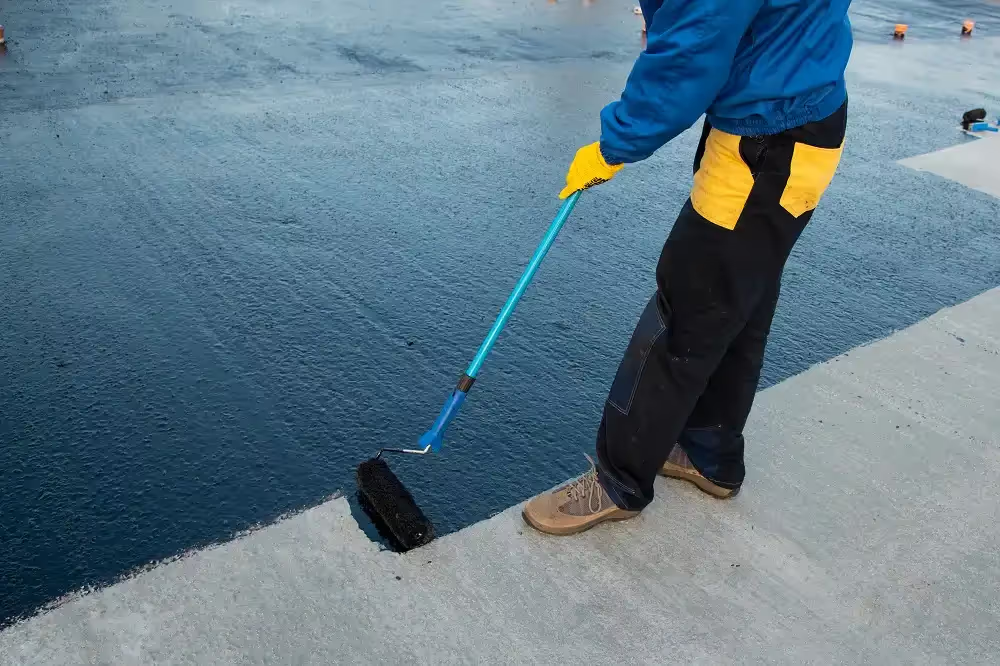
- Pros: Enhanced durability lasting 15-25 years withstands heavy foot traffic, self-healing properties repair minor damage automatically, proven track record in harsh industrial settings, multiple installation methods provide flexibility.
- Cons: Higher weight requires structural assessment on some buildings, torch application needs fire safety precautions meeting building codes, lower reflectivity than white TPO unless treated with protective roof coatings, periodic maintenance needed to maintain the granule surface.
Works well for: Roofs with frequent traffic, equipment-heavy properties, commercial retrofit projects, restoration applications, and properties prioritizing puncture resistance over energy efficiency.
6. Built-Up Roofing (BUR): The Time-Tested Warrior
BUR systems have been protecting commercial buildings for over 100 years, and there's a reason they're still widely used. Among all types of roofs on commercial buildings, built-up systems continue to cover more square footage than any other, proving their reputation for lasting durability.

- Pros: Time-tested reliability with century-long performance history, multiple layers create redundant waterproofing systems, gravel surface protects membrane from UV rays and physical damage, cost-effective for large industrial buildings.
- Cons: Heavy weight may require structural reinforcement, installation produces odors from hot asphalt and roofing felt materials, difficult to locate leaks between multiple layers, limited energy efficiency unless using reflective roof coatings or cap sheets.
Best for: Facilities with rooftop equipment, critical infrastructure, long-term ownership goals, areas prone to harsh weather, and properties where initial cost advantages are the most important.
7. Spray Polyurethane Foam (SPF): Seamless Protection
Spray polyurethane foam (SPF) creates a seamless, monolithic commercial roofing system. It’s applied as a liquid that expands and hardens, making it ideal for irregular roof shapes, penetrations, and roof restoration. SPF provides excellent insulation (R-6 to R-7 per inch) and adds minimal structural load. Installation costs $4–$12 per square foot, with energy savings often offering a quick payback. It can be applied over most existing roof types.
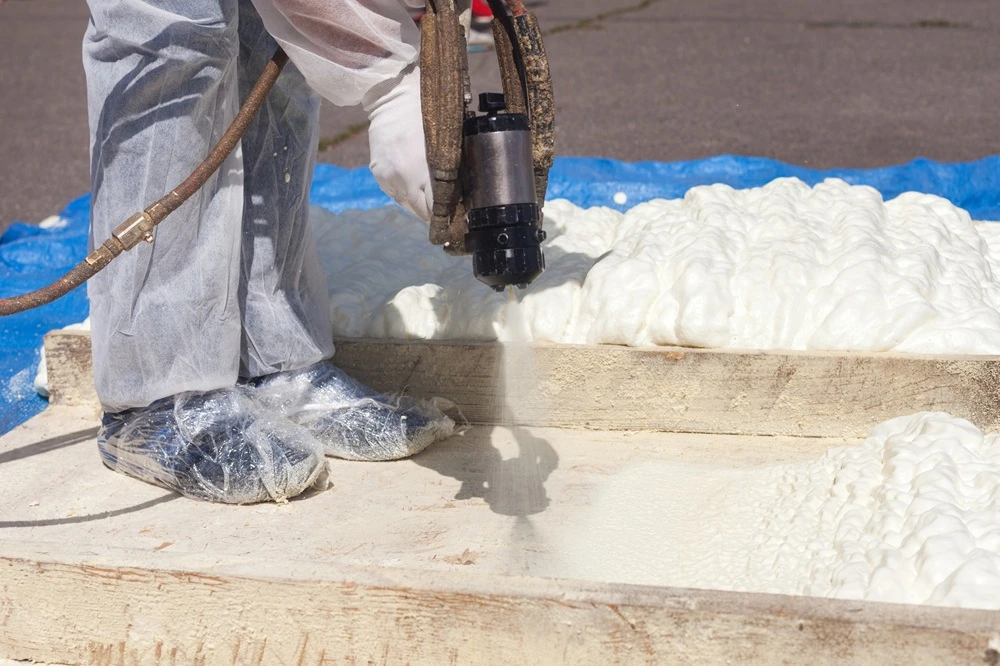
- Pros: Seamless waterproofing eliminates leak-prone seams, superior insulation (R-6 to R-7 per inch) dramatically cuts energy costs, lightweight yet durable construction, renewable through recoating extends life 50+ years.
- Cons: Requires protective coating against UV rays and physical damage, skilled installation critical for proper application, appearance may not suit visible areas, must be recoated every 10-15 years.
Ideal applications: Irregular roof shapes, equipment-intensive rooftops, retrofit projects over existing roofs, buildings prioritizing energy efficiency, and properties in extreme temperature zones.
8. Asphalt Shingles: Affordable Steep-Slope Solution
Many commercial properties have steep-slope roofs on office fronts or entrances. Upgraded architectural asphalt shingles offer commercial-grade protection at residential prices, with wind ratings up to 130 mph and Class A fire resistance. Installation costs $5.50–$8.50 per square foot, and they can last 25–35 years when they’re properly maintained.
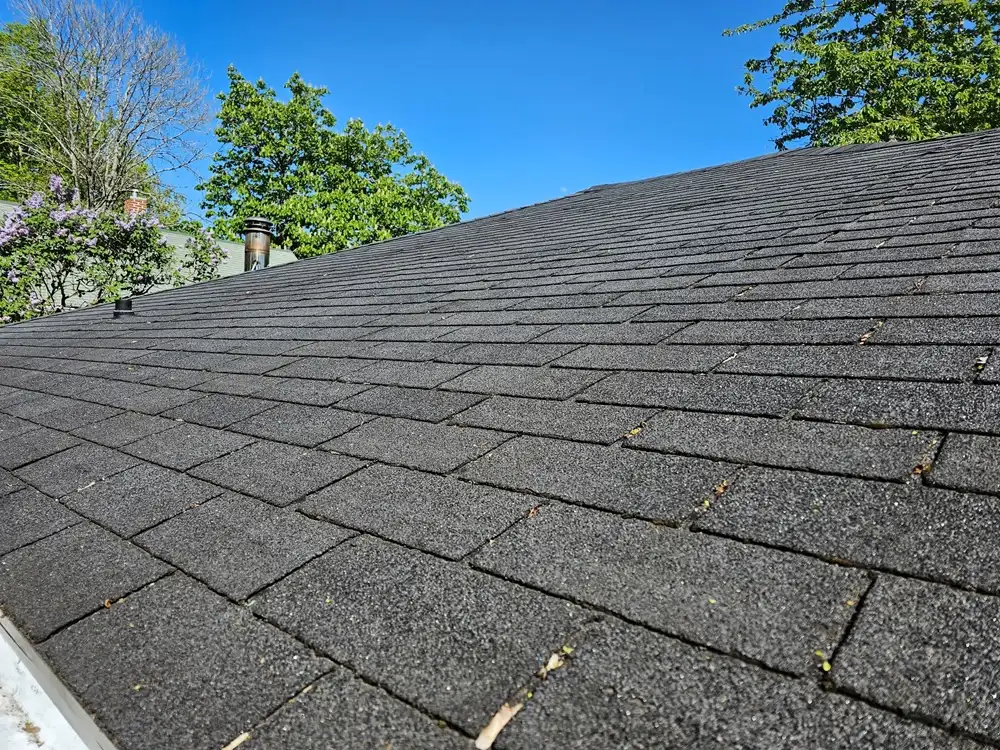
- Pros: Cost-effective compared to metal or slate for steep slope roofs, familiar installation process for most roofing professionals, wide aesthetic variety matches building design, proven performance in residential and light commercial settings.
- Cons: Shorter lifespan than metal or slate roofing systems, requires proper attic ventilation to prevent premature failure, unsuitable for flat roofs or low-slope surfaces, vulnerable to high winds without proper installation.
Best suited for: Steep slope commercial roofs, office building entrances, mixed-use development residential sections, small retail centers, and budget-conscious commercial roofing projects.
Tennessee Climate Considerations
Middle Tennessee's weather attacks commercial roofs from every angle:
- Summer: 95°F+ temperatures, intense UV radiation.
- Spring: Severe thunderstorms, large hail potential.
- Winter: Freeze-thaw cycles, occasional ice storms.
- Year-round: 50+ inches of rain, high humidity.
Climate-matched solutions:
- Best overall: TPO with reinforced hail resistance.
- Cost-conscious choice: White EPDM with UV-protective coating.
- Top-tier durability: Standing seam metal with a Kynar finish.
- For foot traffic: Modified bitumen with a granulated layer.
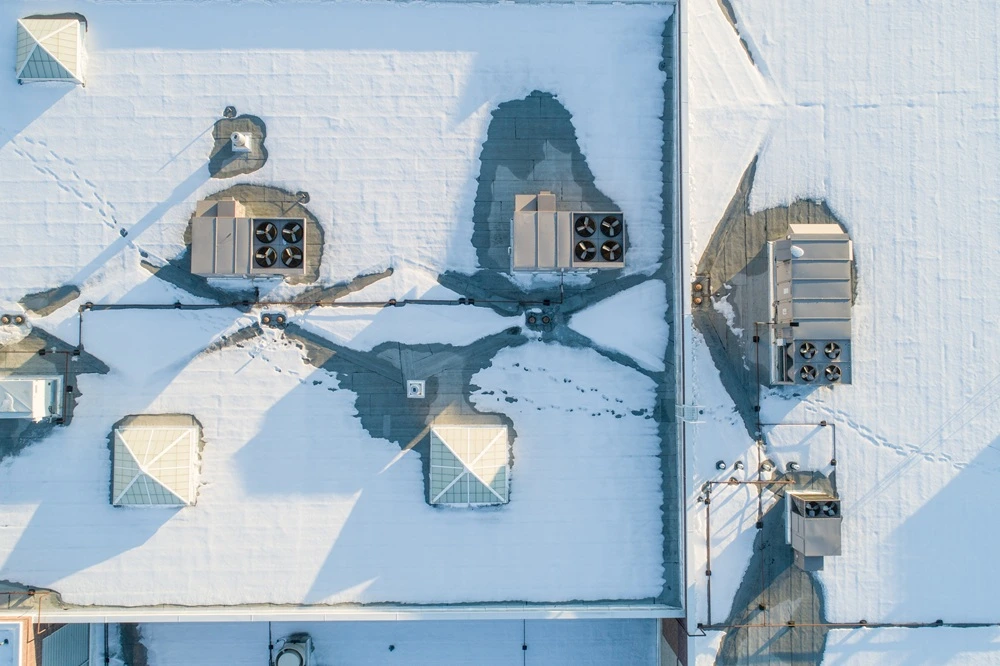
Cool Roofs and Energy Savings You Might Be Missing
The Lawrence Berkeley National Laboratory reports that cool roofs can lower annual cooling energy use by as much as 25%. Research from the U.S. Department of Energy also shows that reflective roofing materials stay up to 100°F cooler than darker options during the hottest part of summer.
Tennessee Code Requirements
For our climate zone, ASHRAE 90.1 standards mandate specific performance minimums:
- Aged Solar Reflectance Index (SRI): 64 minimum.
- Alternative compliance: Solar reflectance ≥ 0.55 with thermal emittance ≥ 0.75.
Documented System Performance
Verified Energy Star ratings:
- White TPO roofs: 0.87 initial reflectivity.
- Coated metal roofing systems: 0.85 reflectivity (Kynar finish).
- White EPDM rubber roofing: 0.80 reflectivity.
- Modified bitumen (white coating): 0.75 reflectivity.
- Traditional BUR (gravel): 0.25 reflectivity.
- PVC roofing membranes: 0.85 reflectivity.
- SPF with coating: 0.90+ reflectivity.
LBNL research indicates nationwide adoption of cool roofing at 80% penetration would generate 10,400 GWh cooling energy savings, translating to $735 million in reduced energy costs.

Strategic Selection: Factors When Choosing the Optimal Commercial Roofing System
With multiple types of proven commercial roofing systems available, you’ll need to evaluate factors unique to your building and business objectives carefully.
Here are some key decision factors:
- Building structure: Roof deck strength determines material options. Heavy BUR systems require structural analysis, while lightweight TPO places minimal stress. Older buildings often need lighter single-ply membranes.
- Climate exposure: Tennessee's severe weather demands hail-resistant, wind-rated materials, and buildings that face intense UV rays need reflective surfaces. Facilities experiencing ponding require proven waterproofing systems.
- Energy efficiency: Cool roofs reduce cooling costs in Tennessee's climate. Reflective materials lower surface temperatures by 50°F+. Calculate long-term savings when comparing systems with different insulation values.
- Budget & lifecycle: Initial investment is only part of the ownership cost. Consider maintenance requirements, lifespan, energy savings, and replacement timing for a true 20-year cost analysis.
- Building use: Facilities with rooftop HVAC access need puncture-resistant materials. Restaurants require chemical-resistant PVC. Warehouses prioritize durability. Match your building’s operational needs to the ideal roofing type.
- Fire & code requirements: Commercial codes mandate specific fire ratings. For example, properties storing flammables need Class A materials. Verify contractor certifications match your selected system for warranty protection.
Avoid roofing scams by partnering with certified, trustworthy contractors who understand commercial roofing material selection and installation.


